Running through Tātai Tuarangi is an early twentieth-century maramataka attributed to Mita Te Tai of Rāwhiti, grounding the exhibition in Te Tai Tokerau knowledge systems and cyclical understandings of time.
Opening during the season of Matariki, the exhibition brings together works by Albert Refiti, Ana Iti, Mara TK, Megan Brady and Saffronn Te Ratana across sound, sculpture, installation, drawing and research. Curated by Megan Tamati-Quennell with Assistant Curator Taniora Erihana Tamati-Rakete, the exhibition is shaped by mātauranga Māori, lunar time and celestial movement, tracing connections between body, environment and cosmos.
How did you think about the role of the maramataka within Tātai Tuarangi as a temporal framework shaping the exhibition?
Megan Tamati-Quennell: Within Tātai Tuarangi, the maramataka operates as a foundational temporal framework. It’s presence within the exhibition is intentionally understated, but conceptually it informs how time is perceived, experienced and activated across the works.
Structurally it is also important. Rather than expressing a linear chronology, the maramataka introduces a cyclical and relational understanding of time that is embedded in the works included in the exhibition. The works are aligned with lunar phases, environmental conditions, or human activity that occurs within those rhythms. So, this exhibition does not just reference the maramataka as a source or object of knowledge, it is instead shaped by its intent and logic.
The works can also be said to echo the maramataka’s movements through notions of repetition, modulation, and return. Sound, the breath, material transformation and the spatial arrangement of the works, register this temporal sensibility.
Grounded in mātauranga Māori specific to Te Tai Tokerau, the maramataka anchors the exhibition within a local epistemological framework, while also expanding into a broader cosmological understanding of time as continuous, iterative, and embodied.
Across the practices there’s an attention to forces often felt rather than seen. What drew you to these more intangible registers, and how did they cohere as a curatorial proposition?
A key point of convergence across the art in Tātai Tuarangi is a connection to dimensions, as you say, that are felt, or to me, are experienced, rather than simply made visible through fixed representation.
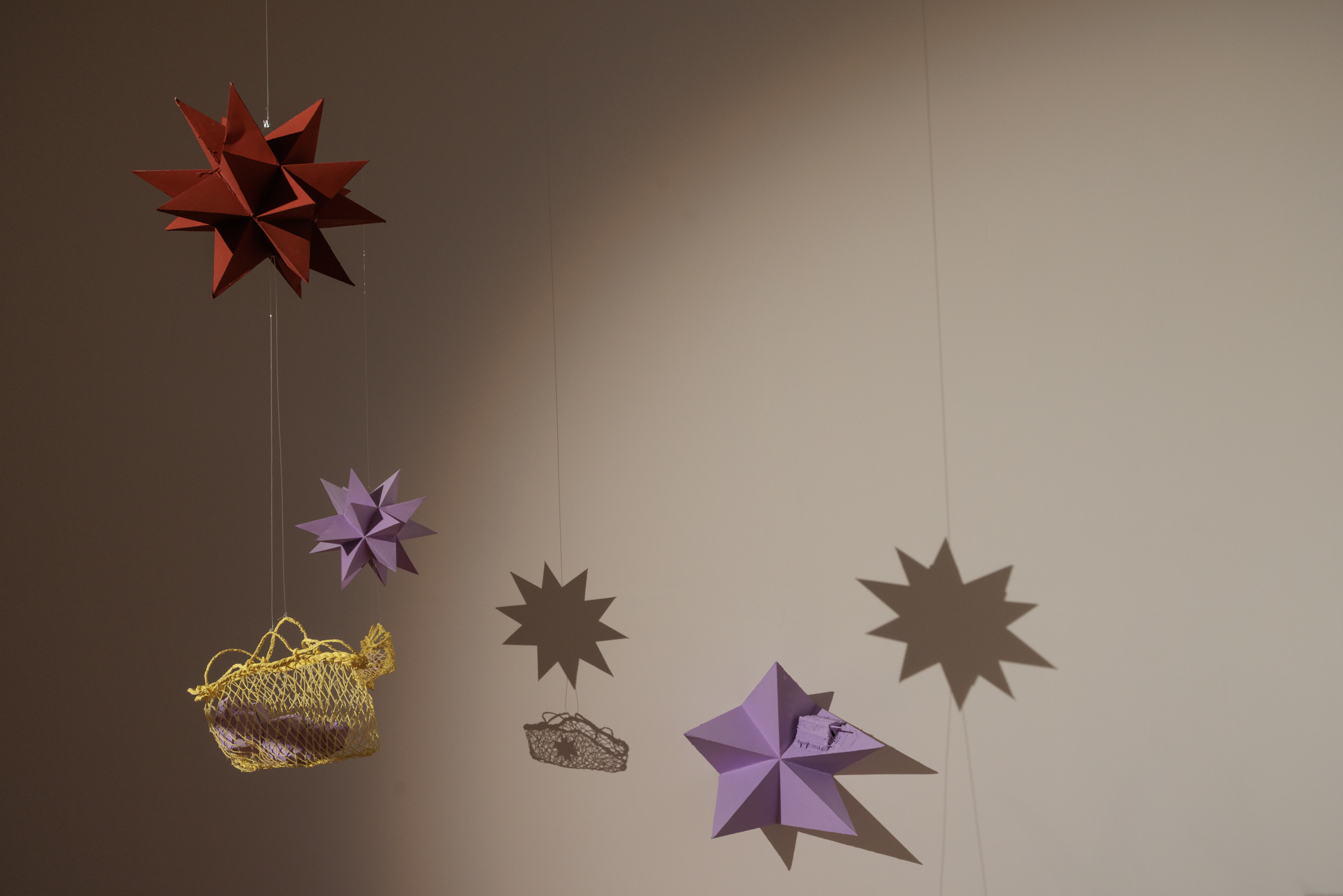
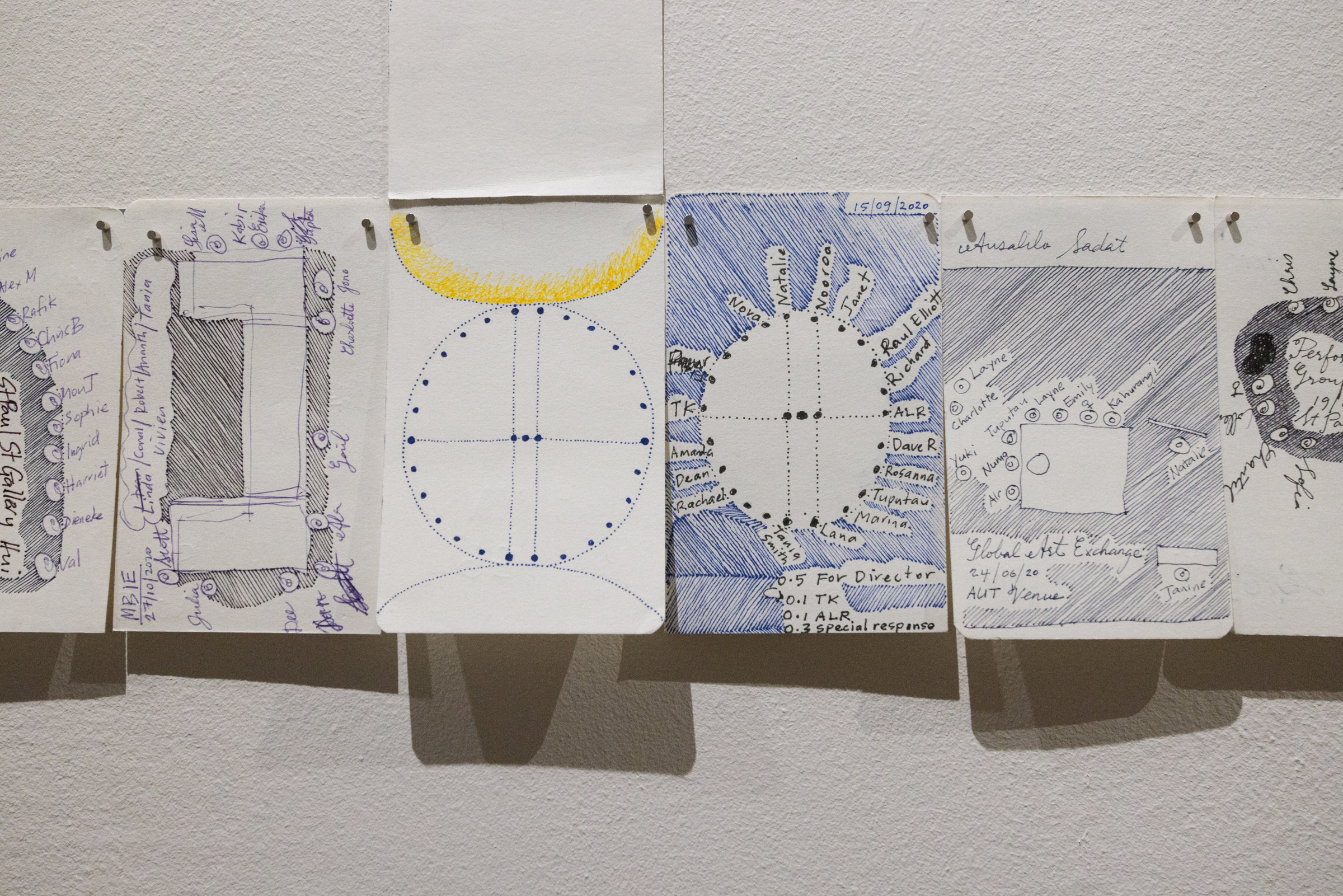
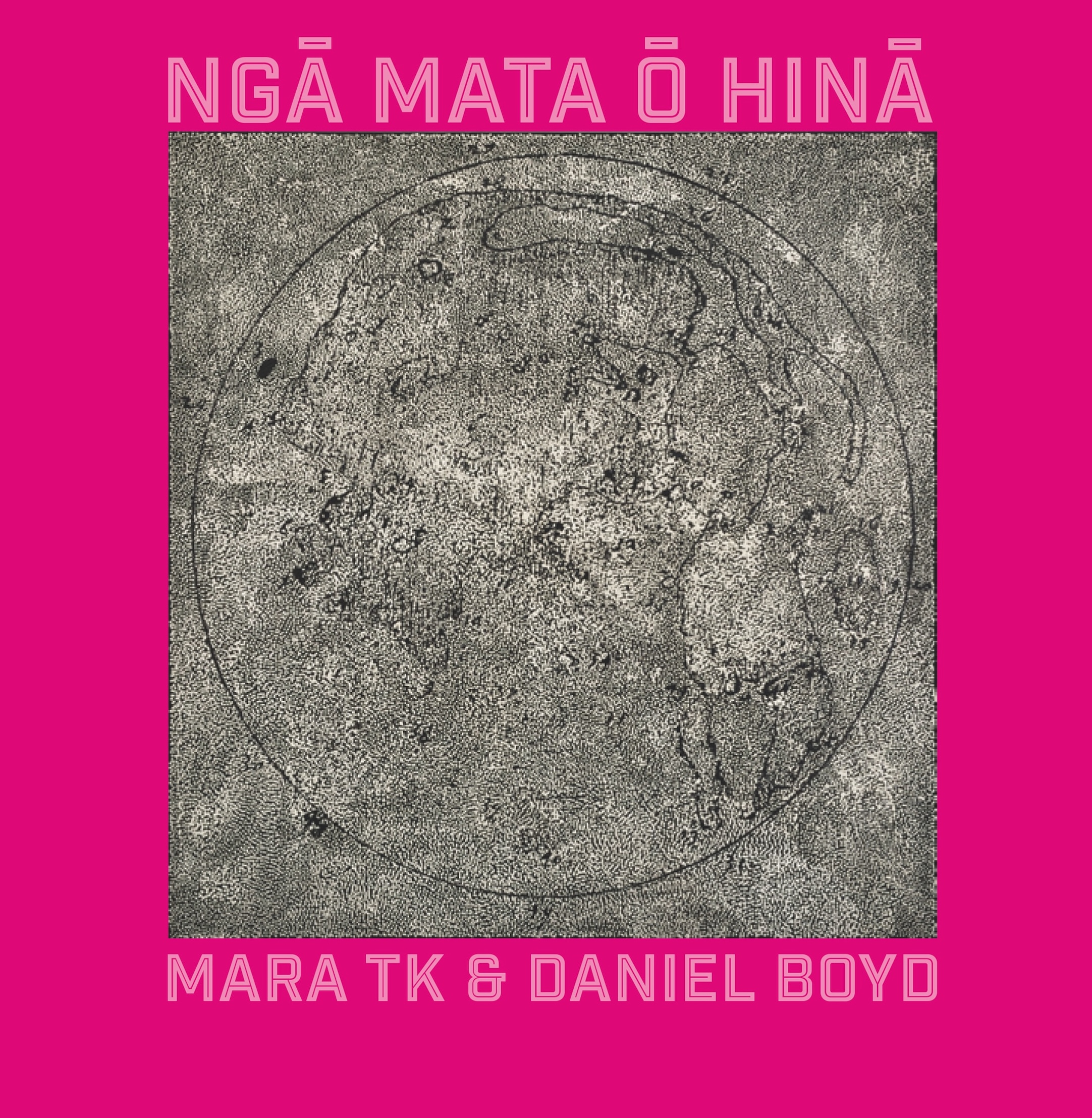
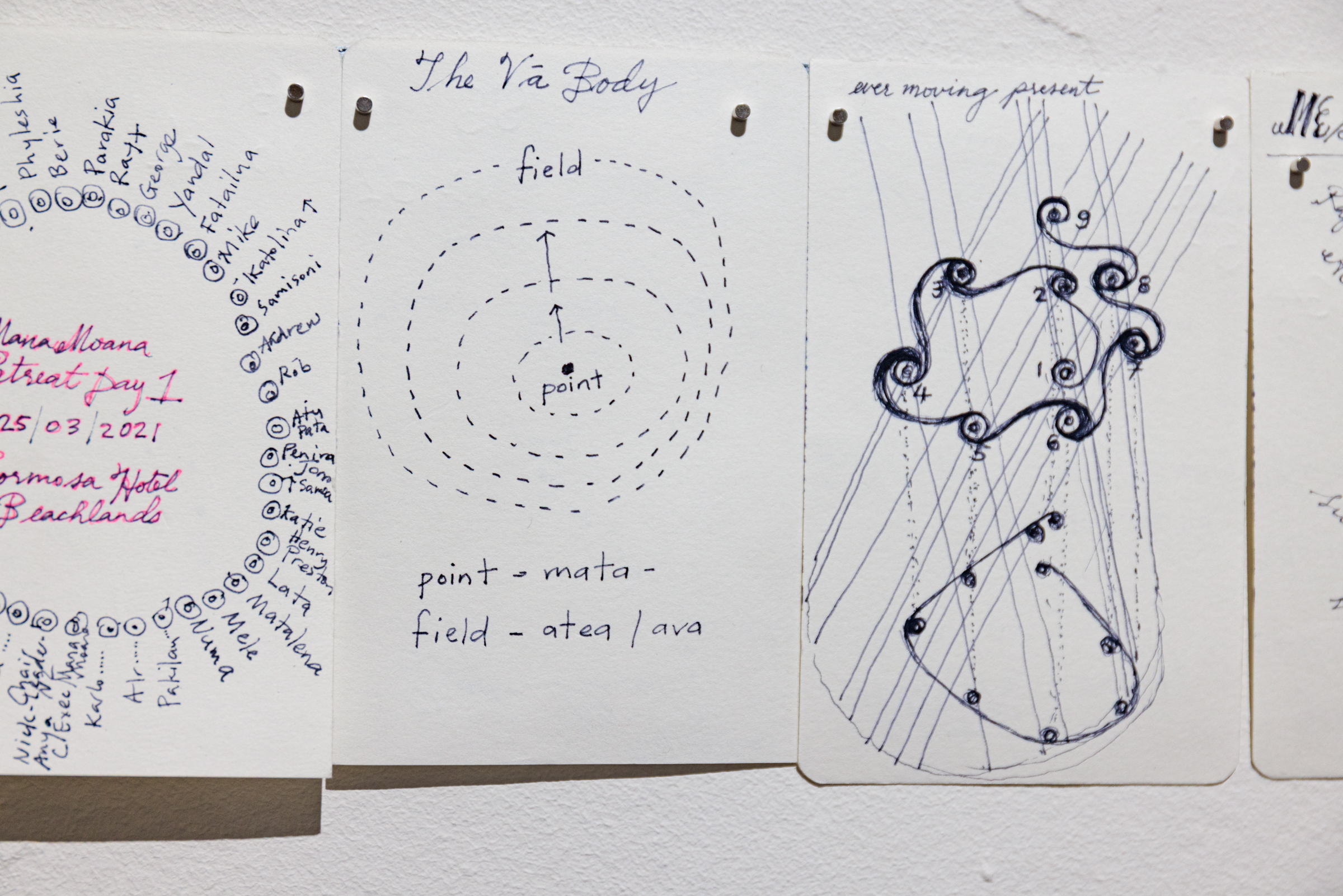
The curatorial proposition for Tātai Tuarangi emerged through an understanding of how each artist would engage with these intangible aspects in distinct and resonant ways, and how their work would sit within the broader context of the exhibition. Mara TK renders lunar relationships audible through sound composition; Ana Iti’s text operates rhythmically, unfolding through the breath and temporal delay; Albert Refiti’s cosmograms are worlds within worlds that express connections relationally and spatially, that map fields that are sensed as much as they are read; both Megan Brady and Saffronn Te Ratana manifest cycles and cosmological occurrences through sculptural and painterly forms.
What brings these individual practices together for me is not formal similarity, but a shared sensibility related to the idea of attunement. The exhibition can be understood as a site in which these varied frequencies intersect.
In this exhibition, how do you hold together Te Tai Tokerau-specific knowledge and the more expansive language of the “cosmic”?
The relationship between Te Tai Tokerau specific knowledge and the expansive language related to cosmology is not conceived in Tātai Tuarangi as a tension or as being in opposition. Mātauranga Māori, as expressed through the maramataka and related knowledge systems, are cosmological in their orientation. They speak to celestial movement, environmental influence and change, and of the interdependent nature of related human activity.
Within Tātai Tuarangi, the exhibition is grounded in specific cultural, material, and geographic references, but also conveys broader cosmological concerns. The maramataka, the use of materials such as kauri charcoal and rimu, the connection to distinctive iwi, particular landscapes and practices, situate the works within lived and localised knowledge systems.
Tātai Tuarangi proposes a lateral understanding, where the cosmos is situated and can be recognised as being present within the local.
What does it mean to curate an exhibition that doesn’t simply represent these systems, but actively participates in them?
To curate an exhibition that participates in, rather than merely representing these systems, required a rethinking and reconfiguring of the project’s curatorial methodology. The curatorial methodology for Tātai Tuarangi included a conscious movement away from a primarily interpretive model of curatorial practice, toward one that is relational, situated, and responsive. Using this approach, the exhibition can be read as an active site in which relationships between works, people, materials, and temporalities are created and sustained, rather than being a neutral context for artworks and objects.
In Tātai Tuarangi, participation is enacted not only between artists and artworks but also through the alignment with the systems that the project is underpinned by. The exhibition’s temporal framing coincides with the season of Matariki. Its conceptual structure is informed by the maramataka that relates locally and in practices that work with processes of transmission through sound, material, language, and whakapapa. The artworks in Tātai Tuarangi do not only illustrate cosmological or ancestral knowledge or systems, they are also drawn from and operate within those systems.
Curating in this context became about calibration and offers an experience that is not just about representation, but also about participation in processes of connection and transmission and ideas related to regeneration and renewal.
Tātai Tuarangi: Star Seeds, Sound Waves and Ceremonies
Albert Refiti, Ana Iti, Mara TK, Megan Brady, Saffronn Te Ratana
Wairau Māori Art Gallery
Whangarei
12 APR – 19 JUL 2026